Important Information
🚌 Getting to Belair
You don’t need a car on the wedding day. Group transport leaves from the V&A Waterfront at 11:00 and the last one heads back at midnight. Belair is about an hour inland in Paarl, so plan to be out for the day — and if you are choosing where to stay, somewhere near the Waterfront makes the morning easy.
📶 Staying Connected
Grab a local SIM at the airport. Shuttle times, lifts and plans for the days around the wedding all move on WhatsApp, and you’ll want maps out in the Winelands where Wi-Fi runs thin.
💳 Paying for Things
Bring a Visa or Mastercard you know works abroad, and tell your bank you’re travelling so it isn’t blocked. Belair is cashless, and so are most restaurants and wine farms.
Things Locals Take for Granted
None of this is in a guidebook, and all of it will save you a small headache.
You need your passport to buy a SIM card
By law every SIM is registered to a person and an address. Take your passport and your hotel booking to the counter and it takes five minutes. Turn up without them and you will be sent away.
If the lights go out, it is usually scheduled
Power cuts run to a timetable. Download EskomSePush before you arrive and set it to the area you are staying in. Most hotels and guesthouses have backup power — worth asking them to confirm before you book, so you are not the one in the dark.
Drink the tap water
Cape Town’s tap water is good. Restaurants will offer you still or sparkling by default and charge for it — just ask for tap.
Someone will watch your car, and expect a coin
Car guards in reflective vests work most public parking. It is informal but normal — five or ten rand when you leave, not when you arrive.
Tip about ten to fifteen percent
It is rarely added to the bill, and it matters to the person serving you. The card machine comes to your table and will ask you for the tip amount before it asks for your PIN.
Use Uber or Bolt, especially after dark
Both are everywhere and cheap by European standards. Walking the city centre late at night with a phone in your hand is the one thing locals would tell you not to do.
Book the wine farms, and mind the closing time
Tastings around Stellenbosch, Franschhoek and Paarl usually stop by five, and the good ones fill up on weekends. Book ahead. Drink-driving limits are strict, so agree who is driving, or take a tour.
The two coasts are different temperatures
Camps Bay and Clifton look tropical and sit at about 13 degrees. False Bay — Muizenberg, Simon’s Town — is several degrees warmer and is where people actually swim.
The red sightseeing bus is not a tourist trap
The hop-on hop-off bus is the cheapest way to see a lot of Cape Town in a day, and the easiest if nobody in your group wants to drive. The routes take in Table Mountain, Camps Bay, Kirstenbosch and the Waterfront, and you can get off wherever you feel like staying a while. Sit on the top deck.
The baboons at Cape Point are not tame
Wind your windows up, do not leave food visible in the car, and do not feed them. They open bags, and they are quicker than you.
You can see the whales from dry land
September is the middle of the season. In Hermanus they come close enough to the cliff path that a boat trip is optional — walk the path and look down.
Go up Table Mountain on the first clear morning
The southeaster shuts the cable car at short notice, sometimes for days, and spring is its season. Do not save the mountain for the end of your trip. Check the cableway’s own website the morning you plan to go — if the cloth is over the mountain, it is closed.
Nobody pumps their own petrol
An attendant fills the tank, checks your oil and washes the windscreen. Tip them a few rand. Keep some cash for this — foreign cards are occasionally refused at the pump.
Words you will hear
Other Chapters
The adapter you need
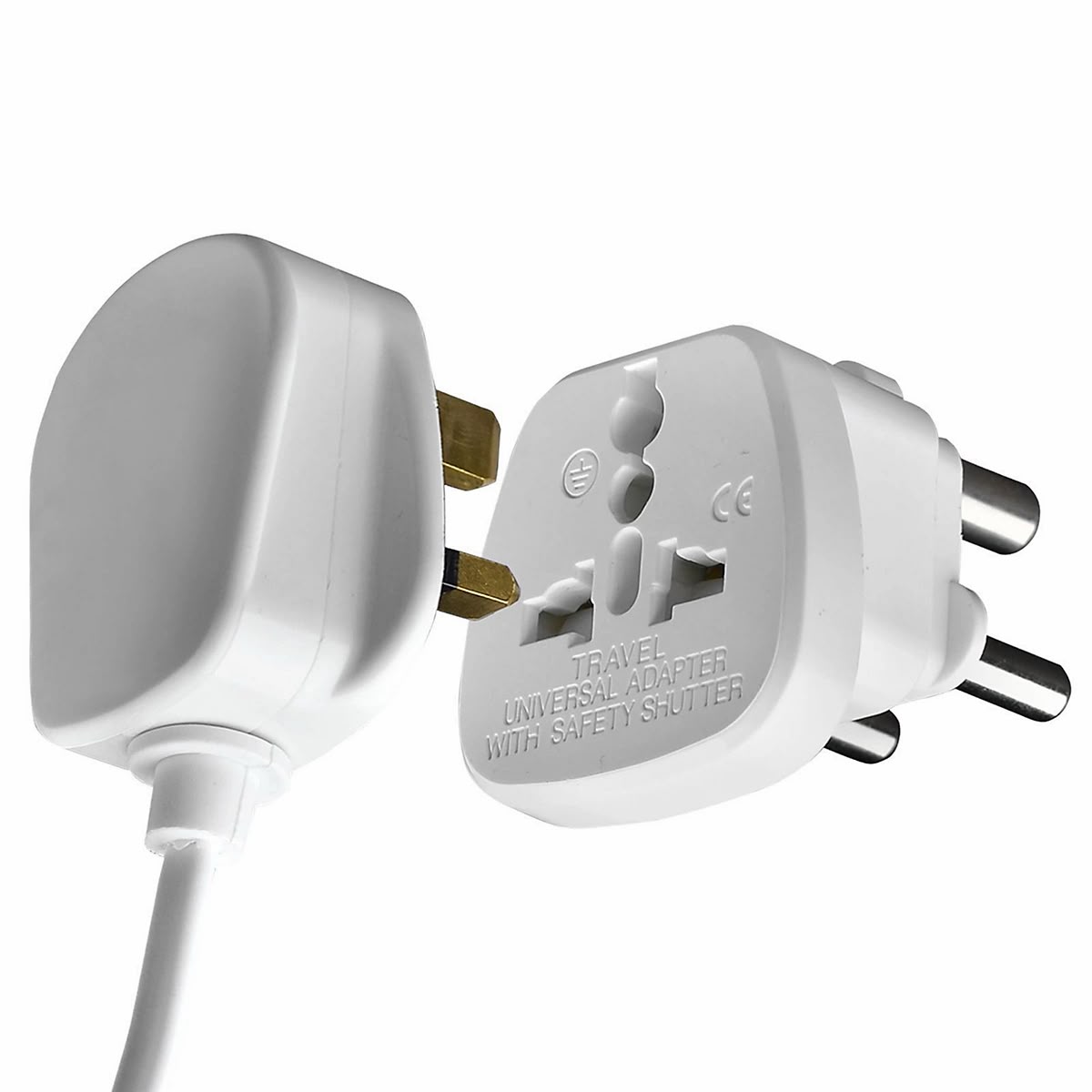
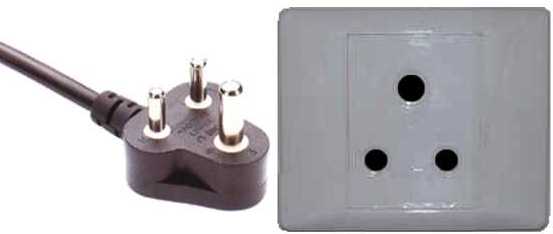
You want a universal travel adapter with South African pins — the kind above. Your European, UK or US plug pushes into the front, and the three large round pins on the back go into the wall. A UK or European adapter is no use here: the pins are the wrong shape.
If you cannot find one at home, buy it on arrival. They are sold at Cape Town International, and in any supermarket, pharmacy or hardware shop once you are here. One between two of you is usually enough if you are sharing a room.
Photograph: Conrad H. McGregor, public domain